
Buying a home "as is" can look like a bargain, especially when you’re house hunting on a PCS timeline. But an as-is listing deserves a closer look before you decide the price or convenience is worth the risk.
For military buyers, the decision gets more complicated when a VA loan is involved. Here’s what to know about inspections, repairs, financing, and the VA appraisal process before you make an offer.
 Photo by Jupiterimages from Photo Images via Canva.com
What Does Buying a Home "As Is" Mean?
In simple terms, buying a home "as is" means the seller is offering the property in its current condition without promising repairs, repair credits, or a price reduction if problems are uncovered. You’re being asked to buy the home in its current condition.
Keep in mind, however, that selling a home as is doesn’t erase disclosure requirements. Sellers must follow applicable state and federal disclosure laws, which can include disclosing known material defects. Requirements vary by state and type of sale, and federal law also requires disclosure of known lead-based paint hazards for most homes built before 1978.
"As is" doesn’t always mean you’re buying a problem, but it does mean you need to understand exactly what you’re buying. Your purchase contract and state law determine your inspection, negotiation, and cancellation rights. An inspection contingency, for example, establishes what options you have if serious issues surface.
Review any disclosures required or provided in your state, but don't rely on them alone when evaluating the home's condition.
Why Is the Home Being Sold As Is?
Sellers choose as-is sales for several reasons, including relocation, inherited property, an older home, or simply wanting to avoid managing repairs.
When asking why the property is being sold as is, understand that the seller isn’t necessarily required to provide details. Whatever the answer, it shouldn’t replace your own due diligence. For military buyers looking for a home during a PCS move, moving quickly shouldn’t mean skipping important steps in the home buying process.
Still, knowing the seller’s reason for choosing an as-is sale can provide helpful context as you decide how much risk you’re comfortable taking on.
VA Loan Considerations When Buying an As-Is Home
Buy an as-is property with a VA loan, but the home still has to meet VA Minimum Property Requirements (MPRs).
Home Inspection vs. VA Minimum Property Requirements
As part of the VA appraisal process, a VA-approved appraiser provides an opinion of the home’s value and notes whether the property meets VA Minimum Property Requirements (MPRs). Meeting MPRs help ensure the property is safe, structurally sound, and sanitary.
A VA appraisal is not a home inspection. The appraiser isn’t evaluating every system or identifying every potential repair, so buyers should still have a separate home inspection.
If the appraisal identifies a condition that has to be fixed to meet VA requirements, it must be resolved before the loan can move forward. Who pays for the repair is negotiable, and an as-is seller may refuse. The VA doesn't prohibit you from paying for required repairs yourself, so that may be your only path forward—which means factoring those costs into your offer. Understand that a home with significant isues can simply be a poor fit for VA financing.
Work closely with a lender experienced in VA loans and a knowledgeable real estate agent so you understand how the property’s condition affects your financing before making an offer.

Essential Inspections Military Buyers Shouldn't Skip
A home inspection remains an important part of understanding what you’re taking on after closing, even when buying a home as is.
A general inspection will identify concerns involving major components such as the roof, foundation, plumbing, electrical system, HVAC, and signs of moisture or water damage. Depending on the property’s age, location, and condition, the inspector may recommend additional evaluations for pests, the sewer line, mold, or radon.
Look closely at the following on the inspection report:
- Roof and gutters
- Foundation and structural issues
- HVAC age and condition
- Electrical system
- Plumbing and sewer
- Water intrusion and drainage
- Windows and doors
- Mold/moisture
- Termites and other pests
- Major appliances
- Safety issues
Use the inspection findings to separate potential expenses into three groups:
- Safety or structural problems that need immediate attention
- Repairs needed in the near future
- Routine maintenance or cosmetic projects that can wait
Then decide whether the total cost still fits your budget and military timeline.
Look Beyond the Home Purchase Price
For a military first-time homebuyer, it's easy to focus on whether the monthly mortgage payment fits your budget and BAH. With an as-is house, you also need to account for what the property could cost after closing.
A lower asking price doesn’t automatically make an as-is property a bargain. Add the cost of known repairs to the purchase price and consider how much cash you’ll have left after closing. Major repairs quickly erase savings on the front end.
Think of it this way: Purchase price + immediate repairs + near-term repairs + maintenance + cash reserve = actual cost.
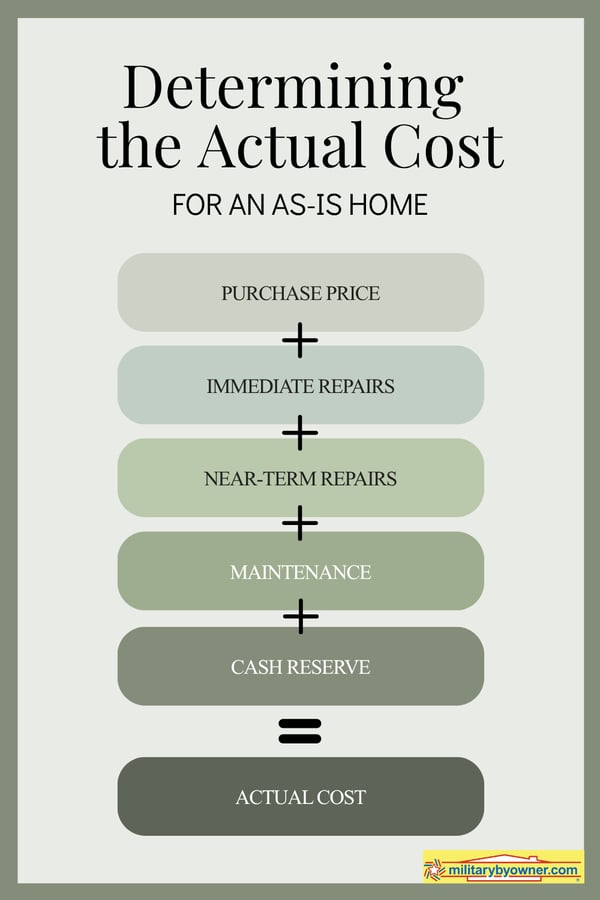
An as-is home makes financial sense when the price reflects its condition, the major systems are sound, and the repairs fit comfortably within your budget. It becomes a poor financial choice when buying the house leaves little room for the expenses that follow.
Buying an As-Is Home as a Military Member
Military life adds another consideration: how long will the home work for you? PCS orders rarely arrive on the timeline you prefer, so think about how the property fits into a future move. Would you sell it or turn it into a rental? Would unfinished projects or major repair needs make either option more difficult?
Also consider the time required to manage renovations around deployments, TDYs, work, and family responsibilities. Who will oversee major projects? If a deployment or TDY lands mid-renovation, that "we'll fix it this summer" plan becomes one spouse managing contractors solo.
An as-is property that requires six months of project management will be different for a military family than it is for someone who expects to live in the home for 15 years.
Think about:
- How soon could the next PCS happen?
- Will you have the time to manage contractors?
- Could you afford unexpected repairs while also paying moving expenses?
- Will the house be easy to rent if you receive orders?
- Will unfinished repairs affect resale?
- Is the property likely to appeal to another military family?
Can You Negotiate on an As-Is Home?
Yes. "As is" doesn’t mean "take it or leave it."
The seller’s decision not to complete repairs doesn’t automatically prevent negotiation over the purchase price or other terms. Your contract determines what happens if problems arise. Inspection, financing, and appraisal contingencies spell out your rights and obligations, including when you can renegotiate or cancel the transaction. Review those terms carefully before signing an offer.
An inspection contingency gives you the option to cancel if the inspection reveals more than you’re prepared to handle. Financing and appraisal contingencies provide additional protection. VA buyers get one more protection: the VA escape clause, a required addendum that lets you walk away with your earnest money if the appraisal comes in below the purchase price.

When Should You Walk Away?
Not every problem uncovered during an inspection is a deal-breaker. A worn appliance or outdated flooring is different from a failing foundation or extensive water damage.
An as-is home may not be worth the risk if the inspection uncovers major structural problems, extensive water damage, serious electrical or plumbing concerns, costly roof issues, or conditions that prevent your financing from being approved.
Walking away also makes sense when the potential repairs exceed your budget or your military timeline makes managing them unrealistic.
FAQs About Buying a Home As Is
Can I still get a home inspection if a house is sold as-is?
Yes. An as-is sale doesn’t prevent you from having the property inspected. It's how you find out what you're actually buying.
Can I negotiate the price of an as-is home?
Yes, although the seller doesn’t have to agree. Inspection findings and repair estimates give you a factual basis for a lower offer.
Can I walk away after the inspection?
Your purchase contract determines whether you can cancel after the inspection and what happens to your earnest money. An inspection contingency spells out those rights and deadlines.
Can I buy an as-is house with a VA loan?
Yes, but the property must still meet VA Minimum Property Requirements. If the VA appraisal identifies conditions that must be corrected to meet applicable MPRs, those issues must be resolved before the VA loan moves forward. An as-is label doesn’t override VA loan requirements.
What problems should I watch for when buying an as-is house?
Pay close attention to major structural and safety concerns and expensive home systems, including the foundation, roof, electrical and plumbing systems, HVAC, moisture or water damage, and signs of pest damage. Your home inspector will identify concerns that warrant further evaluation.
Should I buy a house being sold as is?
Take into consideration the property’s condition, necessary repairs, total cost, and your military timeline. An as-is home is a good purchase only when the numbers and workload make sense for your situation.
An as-is home may be worth considering when:
- The inspection shows that the major systems are sound.
- The price reflects the property's condition.
- You have enough cash reserves for unexpected repairs.
- The repairs fit your timeline and abilities.
- The property makes sense if you receive PCS orders.
Think twice when:
- Major structural problems are present.
- Multiple expensive systems need replacement.
- The repairs will drain your emergency savings.
- The property won't meet your financing requirements.
- You don't have the time or resources to manage the work required.
Is Buying an As-Is Home Right for Your Military Family?
Buying a home as-is isn’t automatically a bargain—or a bad idea. It requires more homework upfront. Understand the property's condition, price out the repairs you'll inherit, know what your financing requires, and think beyond closing day to your next PCS move.
With that information in hand, you’ll know whether an as-is property is an opportunity worth pursuing or one you’re better off leaving behind.